
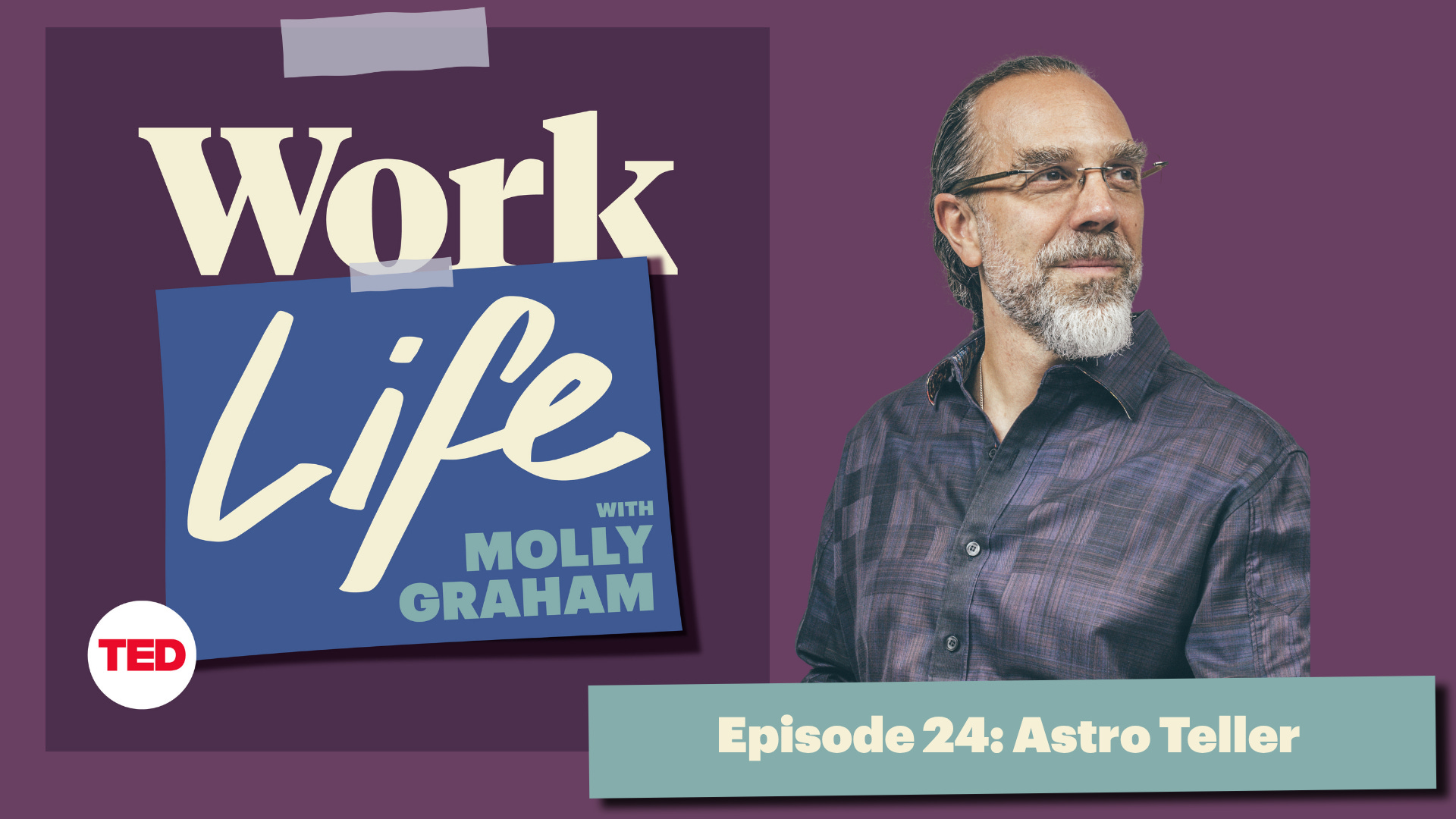
You can listen to the full WorkLife episode anywhere you get your podcasts or watch it on YouTube.
“If you are not committed to de-stigmatizing failure, you are not really committed to learning fast because the tightest learning loops are the ones that have the most failures in them.” — Astro Teller
I got this incredible opportunity a couple of weeks ago to dive into the culture of one of the most fascinating places in the technology industry — X, Alphabet’s Moonshot Factory.
If you don’t know X, it’s the part of Alphabet charged with “creating radical technologies to help solve some of the world’s hardest problems.” Its most famous graduate is probably Waymo, the self-driving car company. But X has also incubated projects involving delivery drones, internet-beaming balloons and lasers, robots that sort through trash, and giant kites that generate electricity.
The things they work on sound as if they belong in a science fiction novel.
But the thing I find most fascinating about X isn’t any particular technology. It’s the idea of the Moonshot Factory.
Think about how strange that is: a factory for innovation?
Most of us think of innovation as unpredictable. You get a bunch of brilliant people together, give them resources, let them experiment, and hope something amazing happens.
A factory is almost the opposite. It’s designed to produce something reliably.
Astro Teller, who has run X for almost its entire existence, has spent over 16 years trying to build an organization that can repeatedly discover and develop technologies that don’t exist yet, and turn some of them into meaningful businesses.
I spent a day at X, participated in one of their very strange, very fun brainstorming exercises, and then sat down with Astro to understand how they’ve built this place.
The full episode is available on your favorite podcast platform and YouTube, but here are three takeaways:
1. Stop confusing progress with learning.
Astro has a wonderful analogy about a project to teach a monkey to stand on a ten-foot pedestal and recite Shakespeare.
His point is that if you were given that project, most people start by building the pedestal. Because it’s easy, you know how to do it, and you can show your boss that you’re making progress. “Look, I built a pedestal!”
But you’ve done nothing to reduce the project's risk. The hard part is teaching the monkey to recite Shakespeare.
At X, teams use this analogy to identify the “monkey” in every project—the riskiest part—and make sure they spend their time on the monkeys.
It’s easy to spend enormous amounts of time doing work that looks like progress without answering the questions that actually determine whether something will succeed.
2. Get really good at proving yourself wrong.
Shortly before Wing, X’s drone-delivery company, launched for the first time, Astro gathered the team and asked them to imagine they were three months in the future, and the launch had been a complete disaster.
Then he gave everyone two minutes to write down all the reasons they knew it would fail.
Suddenly, a team that had been swept up in the excitement of launching started identifying risks they’d been reluctant to confront. Astro didn’t tell people to be less optimistic. He made finding problems the goal.
It is a cousin of the process I was part of: the bad ideas brainstorm. Most of us enter a brainstorm and think that our job is to come up with the best idea. In a bad ideas brainstorm, the only goal is to come up with as many bad ideas as you can.
In both cases, Astro is deliberately changing the rules to make it easier for people to say things they would normally hold back.
Astro’s point is that most of us have spent our careers being rewarded for getting the right answer. He is trying to build a culture where people are rewarded for finding out what’s actually true.
Here’s a taste of him explaining some of this:
3. Make it easier to stop things.
I’ve written before about how much easier it is to add than to subtract. Spending time at X made it incredibly clear that one of the most important skills in building a culture of experimentation and learning is rewarding people for stopping things.
Inside companies, we add projects, priorities, teams, processes, and products. But once something exists, people become attached to it. Careers get built around it. Questioning whether it should exist starts to feel like questioning the people who created it.
At X, they have walls covered in employees’ failure resumes, including Astro’s. For years, they held ceremonies where people acknowledged and mourned projects they’d loved but had to abandon. There are celebrations and rewards when you kill things. Killing a project isn’t just an intellectual decision. It’s an emotional one.
All of these practices are quirky, but they send a message: failure is good. Failure is the point. Everyone you admire fails.
Telling people to be intellectually honest isn’t enough. You have to create an environment where they can admit something isn’t working without feeling like they’ve failed.
What happens when someone comes to you and says the project they’ve spent a year working on isn’t going to work? What happens when they’ve spent $10 million proving something won’t work?
Your reaction in that moment will define your culture far more than anything you say about innovation.
Mike Schroepfer made this point on WorkLife a couple of months ago, too. Creating a culture where people feel safe taking risks requires real discipline about how leaders respond when things fail.
We’ve all heard that failure is necessary for innovation. But what I took away from my time at X is that you have to deliberately build a culture where people are rewarded for discovering what’s not working, where stopping a project is seen as progress rather than defeat, and where admitting you were wrong doesn’t damage your career.
A huge part of the discipline of innovation is building an organization that's as willing to let go of ideas as it is to come up with them.
Fascinating.
What else?
If this resonates with you, here are things you can do next:
Listen to the WorkLife podcast, where I try to untangle the messy, human side of work.
If you’re a leader looking for a community of peers to lean on and learn from, come find out more about Glue Club over here.
For senior women leaders looking to build empowering relationships, check out the Guild.
My team and I give keynotes and run workshops inside companies to help leaders lead well through fast growth and change. Reach out if we can help.
I really really don't take advice from most articles I read esp as former Googler but somehow this one really landed. Super simple but have been applying it to the San Francisco neighborhood parfumerie I am building and it has been a really helpful way to re-frame everything I do. Thank you so much for sharing.
The pedestal story hit home. A staffing team recently asked me for more leads, and when we checked their CRM, most of the accounts they wanted were already clients, with a partner down the hall who’d never been asked for an intro. Fresh pipeline in a few weeks, zero dollars spent. Molly, did Astro say how teams spot the monkey when everyone’s attached to the pedestal?