
You can’t choose what happens, but you can choose how you respond
Managing Adversity with Don Faul
With Amazon Music, you can discover the WorkLife episodes most relevant to you. Listen to WorkLife on Amazon Music.
I don’t have many work regrets. I’m actually not a big believer in the word “regret” — I think every experience gets you to where you are now, and you can learn something from basically anything if you’re willing to look at it honestly.
But when I look back over my career, the regrets I do have almost all come from the same place: how I treated someone, or how I behaved, when things were hard.
There was a phase at Facebook on a project I was on where things got very political. It was a clash between various teams, a power vacuum, and a frantic energy in general. I definitely let it get the best of me. I have a memory of yelling during a meeting, which for those of you who don’t know me, is not something I do. I also have a memory of treating some folks with a lot of arrogance and dismissiveness, among other things. In short, I’m really not proud of how I handled it.
What situations like that taught me, at least in retrospect, is that when there’s conflict, or things get political, you want to be able to look back — regardless of the outcome — and say “I did my best.” That phrase implies a bunch of stuff. You’re accepting that you can’t control the situation or the outcome. You’re accepting that you can’t control other people’s behavior. All you can control is what you do and how you comport yourself in a hard moment. You want to look back and feel mostly proud of how you handled yourself, regardless of how things turned out.
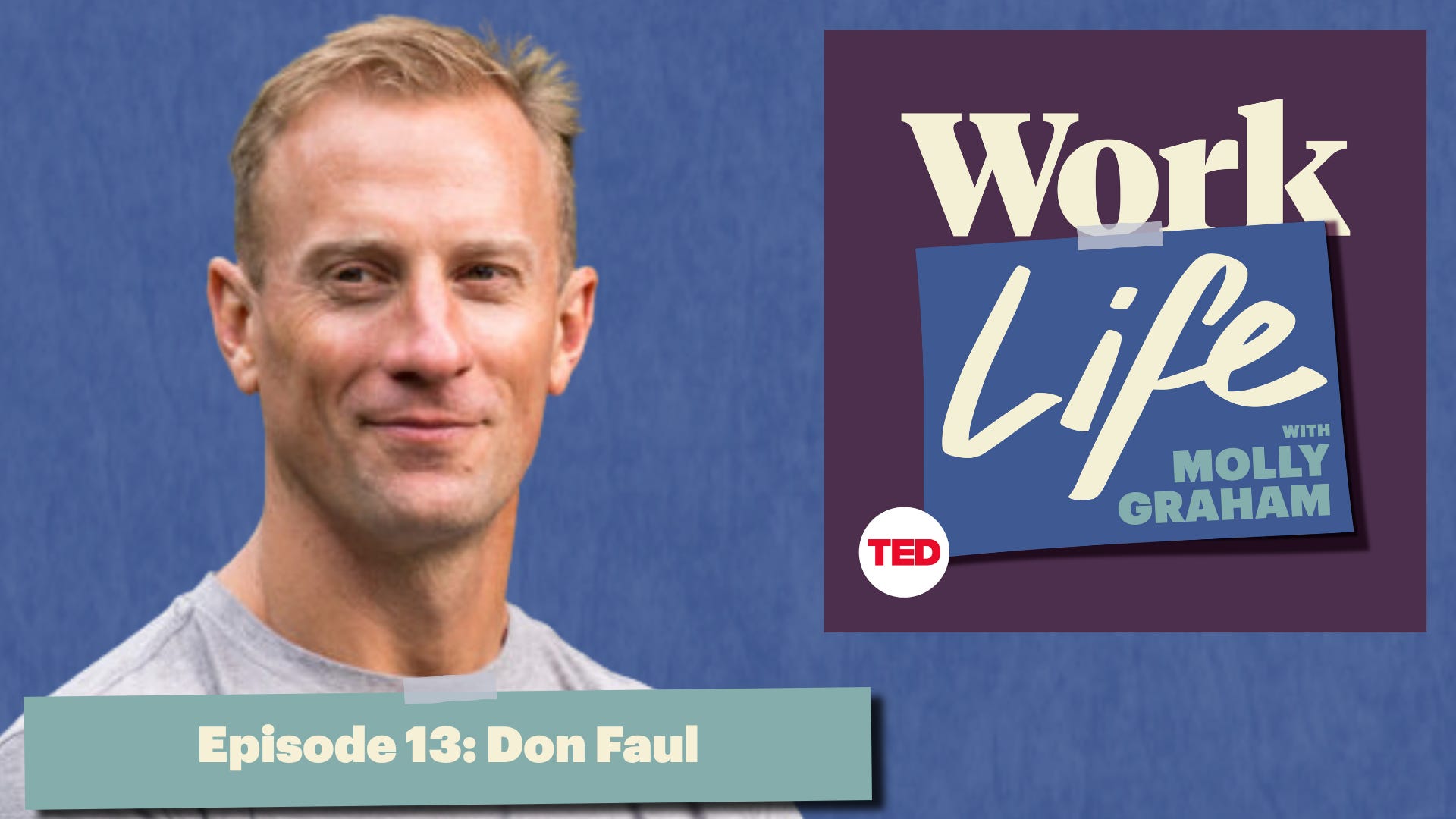
I talked to Don Faul about this on the most recent episode of WorkLife. Don is the former CEO of CrossFit, former operations exec at Pinterest, Facebook, and Google, and a great friend of mine. Don started his career in the Marines, and I wanted to know what leading under real pressure — the kind where people might die — taught him about this.
Threaded through every story he told was some version of the same conclusion: you can’t control the circumstances, but you can control how you respond.
He told me a story that’s basically the same shape as mine, just wearing a different uniform. Don was planning a mission with a commanding officer he didn’t respect — they disagreed regularly, about tactics and about values. In one specific moment, he found himself thinking, I’m going to fight him on this. And then, almost as quickly: what am I doing? I’m making this worse. He caught himself, and instead of asking “how do I win this,” he asked, “what can I do to create the best possible outcome?”
Same issue as mine, in a lot of ways — except he caught it in the moment, and I didn’t. The disagreement with his commander was real, and it stayed real. He couldn’t change that. The only thing he could control was whether his ego was about to turn a bad day into a worse one.
Don got an early, pretty blunt version of this training at the Naval Academy. Freshmen are only allowed four responses when a superior addresses them: yes sir, no sir, I’ll find out sir, no excuse sir. That’s it. No “well, actually.” No story about why. Don said he’d spent his whole life up to that point explaining why things weren’t his fault, and those rules just took the excuse off the table. It’s one of the lessons from the Marines that’s translated most directly into his business leadership: you find a way, or you make one.
Don’s had to practice this — by his own account, thousands of times — until it became something closer to instinct. You don’t get to choose what happens to you; you get to choose how you respond. And I can vouch for the fact that, despite going through lots of incredibly challenging moments in business (where I might be curled up in a ball on the floor), he’s one of the most even-keeled people I’ve spent time with.
The other thing he said about how he manages to stay calm in the face of chaos: adversity is about perspective. For some reason, that sentence has stuck with me since. A couple of years ago, I was leading a company through a really tough phase, and someone mentioned that I didn’t seem stressed about it. It made me stop and reflect. Similar to what Don said — I think in that moment, all my prior experience had already told me that whatever we were going through was going to be fine, one way or another. It wasn’t actually that bad. No one’s life was on the line.
That’s the thing about perspective — it’s not a mood or a personality trait. It’s something you build, usually by going through hard things and finding out you survived it. You also typically figure out that none of it was quite as bad or important as you thought it was. I clearly hadn’t built enough of it yet during that political mess at Facebook. I have more of it now. I’ve been through enough bad moments to know that most of what feels unbearable in the moment is survivable, and most of what I’ll actually regret has nothing to do with how things turned out — it’s about whether I liked who I was while it was happening.
Don and I also recorded a second episode together, because there’s one more story from his time at Facebook I wanted him to tell in full. It’ll be live next week. Don was layered — his job was split in half — and I asked him to walk through what that actually felt like, how he responded, and now that he’s been on the other side of it too, how to handle it well if you’re the one doing the layering. Not surprisingly, one of the things he talks about in that episode is how emotional the experience was for him, but how he realized that the only thing he could control – given that it wasn’t his decision – was how he responded.
If you’d like to hear some thoughts about layering before the episode next week, take a look at this article I wrote recently.
You can listen to the full WorkLife episode anywhere you get your podcasts or watch it on YouTube.
What else?
If this resonates with you, here are things you can do next:
Subscribe to Lessons to get new posts. I post at least 2X per month for all, and paid subscribers also get access to video courses and the full library of content.
Listen to the WorkLife podcast, where I talk to brilliant leaders and builders to untangle the messy, human side of work.
Follow me on LinkedIn, where I share more tools, thoughts, and a little of the day-to-day chaos.
And if you’re a leader looking for a community of peers to lean on and learn from, come find out more about Glue Club over here.