
New WorkLife episode: FAQ - How to disagree productively, know which hills to die on, and find your mentors with Ashley Murphy
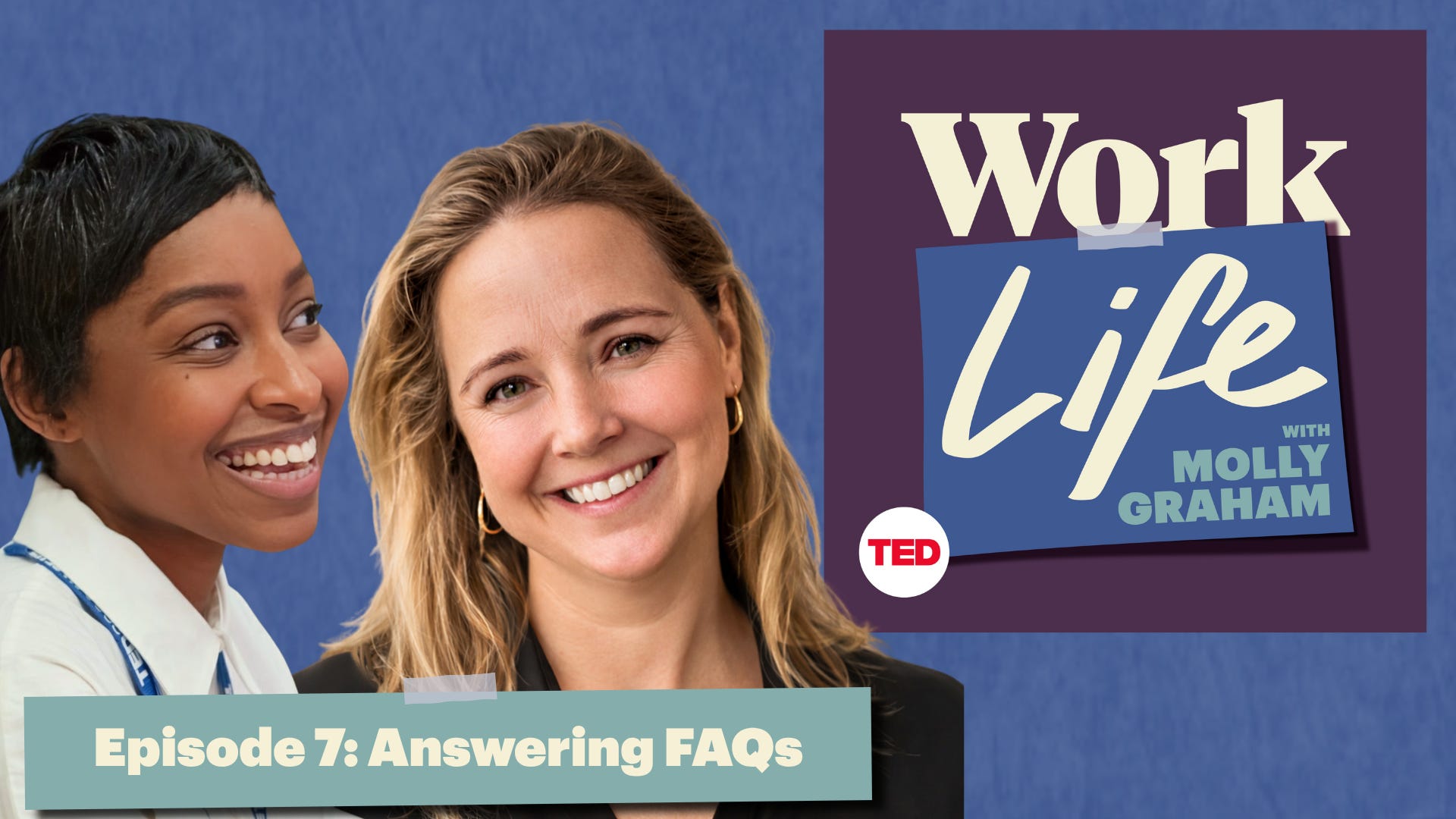
This week, we’re introducing a different kind of episode: Frequently Asked Questions. We want to create a two-way dialogue with you, so our hope is that these episodes can allow you all to ask questions that are top of mind for your work life. If folks like it, we’ll keep doing it.
To kick us off, Ashley Murphy and I chose a bunch of questions that we hear regularly from folks in our community, Glue Club. Glue Club is a leadership development community built for mid-career leaders seeking support and growth as they build rapidly changing companies. Over the last 3.5 years of working with folks in that community, some of the same sticking points come up time and time again, so we’re using some of those as a starting place.
In the future, we’d love for these questions to come from you, the WorkLife listeners. You can submit questions by replying to this email, messaging me on LinkedIn, emailing worklife@ted.com, or leaving a voicemail at 347-377-2938.
You can listen to the full WorkLife episode anywhere you get your podcasts or watch it on YouTube, but here’s a sneak peek:
Key Takeaways
1. “Disagree and Commit” is harder than it sounds — try “Disagree and Let’s See” instead
The well-known framework, “Disagree and commit”, sounds clean in theory but it can be hard in practice. My reframe: approach disagreement as a genuine experiment. The shift isn’t just semantic. It requires believing that neither you nor your manager (or whoever the decision-maker is) has the full answer. You might not agree with the path forward, but if you see everything as an experiment, then it matters a little less. You just need to set clear metrics, define a time horizon for the experiment — and actually let it play out. Sometimes, you’ll be surprised by the result, and sometimes it will play out exactly how you thought, but mostly, this approach just turns the temperature down on the fight.
2. The best culture actively repels the wrong people
Leadership consultant Marcus Buckingham once told me that the best job descriptions should be repellent — written to attract the five (or some small number) people perfect for the role, and to repel everyone else. The same is true of culture. Trying to make your values universally appealing makes them meaningless. Honest, specific, even uncomfortable values help the right people opt in — and everyone else opt out. Clarity, even the uncomfortable version, is the goal.
3. What’s the difference between a therapist, a coach, and an advisor? And which one do you need?
There are three distinct types of support, and it is so helpful to be clear about which one you need in a given moment.
A therapist helps you unpack your past, often your parents, your patterns, what triggers you, and why. I call it your programming. But typically therapy is a deep dive into who you are, what made you that way, and why you react the way you do to certain things (also how to get better at it).
A coach typically helps you better understand yourself as a leader — strengths and weaknesses — and uses smart questions and frameworks to draw answers out of you. They are not there to tell you what to do, nor do they usually have relevant experience to your domain. A great coach can help almost any leader in the world.
An advisor has experience directly relevant to your job. They have been where you are, have tried things and succeeded and failed, and will tell you what they’d do. An advisor is full of practical, experience-based guidance.
A lot of people think they’re trying to look for a coach when they actually want an advisor. Trying to find all three (or even 2) in one person often means getting a suboptimal version. Figure out what you actually need before you go looking.
Submit questions for future episodes
There’s a lot more inside this episode, so give it a listen. If you want a question answered by me on a future episode, feel free to reply to this email, message me on LinkedIn, email worklife@ted.com, or leave a voicemail at 347-377-2938.
And if Glue Club sounds like the kind of community you’d like to be part of, applications close on June 26 for the New Member group kicking off in July. This is the kind of conversation that happens there daily.
What else?
👋Hi! I’m Molly. This is where I share the lessons I’ve learned from building fast-moving, messy, ambitious companies. If you’re new here, here’s what you can do to stay connected:
Subscribe to Lessons to get new posts. I post at least 2x per month for all, and paid subscribers also get access to video courses and the full library of content. We’ll also post here every time a new episode of WorkLife comes out.
Follow me on LinkedIn, where I share more tools, thoughts, and a little of the day-to-day chaos.
And if you’re a leader looking for a community of peers to lean on and learn from, come find out more about Glue Club over here.