Culture is what you do, not what you say
A WorkLife conversation with Mike Schroepfer
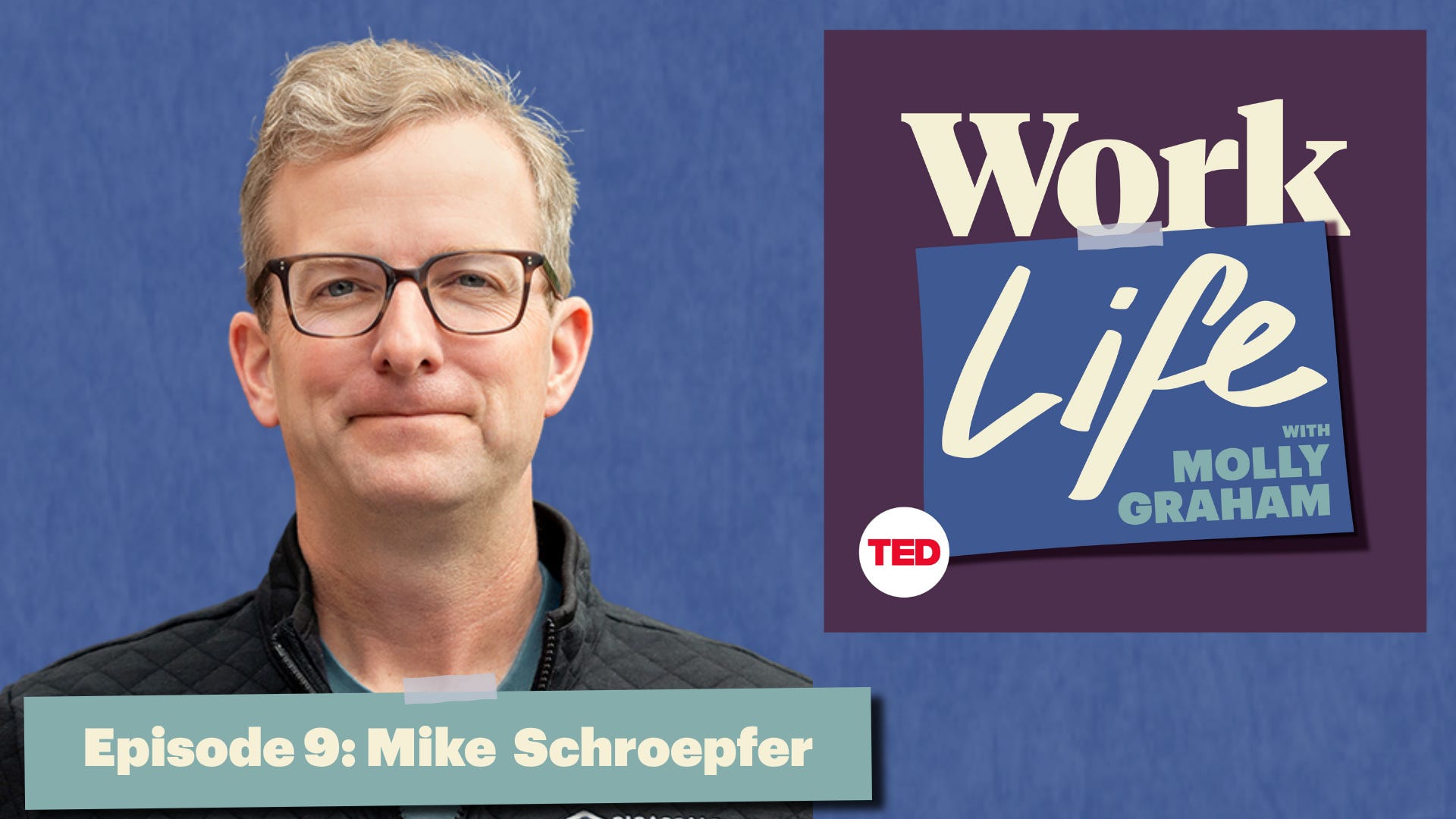
You can listen to the full WorkLife episode anywhere you get your podcasts or watch it on YouTube.
Also, the next start date for Glue Club is around the corner (July). Applications are due on June 26. If you’re a leader in a fast-changing company looking for peers to learn from and lean on, come join us!
Talking about culture makes me want to scream.
Which is ironic because I used to have “culture” in my title at Facebook.
It drives me nuts for two reasons. First, culture is a black hole word — it means something different to every person who uses it. Second, I see so much energy invested in the wrong things when it comes to “culture”: beautiful values statements that make great posters; consulting firms hired to run employee surveys and bottoms-up processes that create principles no one remembers.
I spent a lot of time and energy at Facebook — which had a VERY strong culture for better or for worse — trying to help craft and shape the culture, which was mostly a waste, but it left me with some very strongly held beliefs about what culture is and what it isn’t. They are:
Culture comes from the top.
What you do matters more than what you write down.
The best cultures are repellent to some people.
Anything you write down only matters if people can remember it.
Culture has to evolve as you grow.
This week on WorkLife, I talked to Mike Schroepfer — Schrep to me and many others — Facebook's longtime CTO and current founder of Gigascale Capital, about the best part of Facebook's culture: its ability to learn, fail, and move on to more learning. The stories he told made each of these points more clearly than I ever have. Here’s a clip of the convo to give you a taste:
1. Culture comes from the top.
This was one of the most humbling lessons I learned while trying to shape Facebook's culture from my cute chair in HR. That is not how this works.
The vast majority of culture is shaped by the personality and behaviors of the founder. After that, it’s reinforced and reverberated by the senior leaders around them. Schrep said it simply: “Most cultures are a direct reflection of the founder. It’s really hard to build a company culture with an involved founder that’s orthogonal to how the founder feels.”
What that meant at Facebook was that Mark embodied the learning culture before it was ever written down. He was unsentimental. When something went wrong, he never asked who was responsible — he asked what happened and what do we do now. As Schrep put it: “I don’t ever remember Mark saying ‘who was responsible?’ It was more like, ‘what happened, and what do we do now?’” That consistency made everything else easier to build.
When you’re choosing where to work, you’re basically choosing a personality to work inside of, weird as that might sound. The more senior you get, the more carefully you need to think about that.
This is also why I don’t believe in bottoms-up culture exercises. If you want language, values, and principles, start with the CEO. It will get you most of the way there.
2. What you do matters more than what you write down.
This is probably the belief I feel most strongly about. You could never write anything down — no values, no posters, no principles — and you would still have a culture.
Culture is crafted through the behavior of the people at the top. Your culture already exists; you just have to figure out how to articulate it.
This also makes it clear how cultures get broken. When there is dissonance between what you say and what you do, people get lost. You say you value bottoms-up feedback, but you fire people who give it. You say you want transparency, but you make decisions behind closed doors. The larger that gap, the more distracting and demoralizing it is for everyone inside it.
Schrep understood this deeply. You can hear it in how carefully he thought about everything — the format of every All Hands, how he reacted when things went badly — because he knew his behavior created ripple effects.
On the show he tells this story — he considers it one of his proudest moments at Facebook — about a worldwide outage that was costing the company millons of dollars. And in the middle of all of it, someone pipes up and basically says “I think it was my diff that took the site down.”
Think about what it takes to say that. In the middle of a disaster. In front of your boss’s boss. When people are already stressed and losing money and looking for answers.
The only way that happens is if the person raising their hand already know what’s coming next. And what happened next at Facebook was: zero blaming. Zero yelling. “Thank you. You got us back up faster. Now let’s figure out how this never happens again.”
That safety wasn’t built by a policy or a values statement. It was built by a thousand small decisions — who got celebrated, how failures got examined. Learning culture vs. blame culture. The difference isn’t philosophical; it’s what you actually do in the room, every day, when it’s hard.
3. The best cultures are repellent to some people.
This is the one that gets the most pushback when I say it out loud. People conflate psychological safety with belonging, and I think that’s a mistake. Psychological safety — people being able to show up and do their best work — is something every culture should strive for. But wanting everyone to belong? That’s not the goal. The goal is to be opinionated about who does and who doesn’t belong.
Great cultures attract the right people precisely because they repel the wrong ones. The job description that tries to appeal to everyone only does you a disservice.
I told this story a long time ago in a First Round article, but when I was rewriting the Facebook values with Mark in 2009, he pulled out an old list called “one of us”. It was something he had written when he was first trying to put words to the culture at Facebook. The list was:
A very high IQ
Strong sense of purpose
Relentless focus on success
Aggressive and competitive
High quality bar, bordering on perfectionism
Likes changing and disrupting things
New ideas on how to do things better
High integrity
Surrounds themselves with good people
Cares about building real value over perceived value
If you read the list, it’s very controversial (or at least it felt that way to me when I first read it), but it also sounds a lot like Mark. It’s a list that a lot of people would read and think: “not for me.” That is a GOOD thing. You want the right people to think “Yup!” and the wrong people to run.
Schrep makes this point through the lens of trade-offs. If you describe your culture and can’t name its downsides, you don’t fully understand what you’re building. Every real culture embodies trade-offs — and the leaders who’ve built the strongest ones are unafraid to name them.
4. Anything you write down only matters if people can remember it.
I’ve written about this one at length — go read it here — but the short version is: if people can’t hold something in their head, they can’t use it to make decisions. Schrep has the same instinct. He calls it the “rules of three” — most humans can remember three to five things, so if you have a seven or eight or twelve-tenant culture, pick a random employee and ask them what number seven is. You already know the answer. Fewer, simpler, and more specific beats comprehensive every time.
5. Culture has to evolve as you grow.
People think evolution means losing something. Maybe it does, but it’s a necessary shedding. Evolving means staying in dialogue with your organization about what still serves you and what doesn’t.
The culture that gets you to 100 people is not the culture that gets you to 1,000 or 10,000. At Facebook, there was real pride early on in shipping fast, breaking things, moving on. Interns shipped code to production in their first week. The site went down sometimes. And for a while, that was exactly right — speed mattered more than perfection, and the cost of downtime was low enough that it was worth it.
Then you get to hundreds of millions of users. Whole businesses depending on your platform. And suddenly “don’t be afraid to break things” means something different than it used to.
Schrep describes this as inertia — the most powerful force in the universe, as he puts it. A group of people who have been very successful doing something a certain way will resist changing it, even as the world around them changes. The job of a leader is to notice when that’s happening and nudge the org in a different direction. Not bulldoze. Nudge.
What I watched happen at Facebook — and what Schrep articulates better than I ever have — wasn't abandoning the culture. It was Mark having a real conversation with the company about what we still were and what we needed to shed.
Schrep said something that stuck with me: when that engineer raised his hand in the middle of a crisis and said “I think it was my diff,” it saved the company hours of downtime and millions of dollars. That happened because of culture. Not a poster and not a values doc. A thousand small decisions made by leaders who knew their behavior was the message.
That’s why it matters.
You already have a culture. The only question is whether you’re being intentional about it — and whether what you’re doing matches what you’re saying.
Culture isn't a project. It's what happens every day whether you're paying attention or not.
What else?
If this resonates for you, here are things you can do next:
Subscribe to Lessons to get new posts. I post at least 2X per month for all, and paid subscribers also get access to video courses and the full library of content.
Listen to the WorkLife podcast, where I talk to brilliant leaders and builders to untangle the messy, human side of work.
Follow me on LinkedIn, where I share more tools, thoughts, and a little of the day-to-day chaos.
And if you’re a leader looking for a community of peers to lean on and learn from, come find out more about Glue Club over here.


Agree that culture is defined by action. It’s defined by how the team works together.
Molly, I love reading your writing, but sometimes I have to be incredulous. I don't think Mark and "high integrity" go together after all the bad behavior at FB that has been exposed. I'm not sure how to reconcile your recollection of your time there with all that I've read over the years.