
Where does your clarity come from?
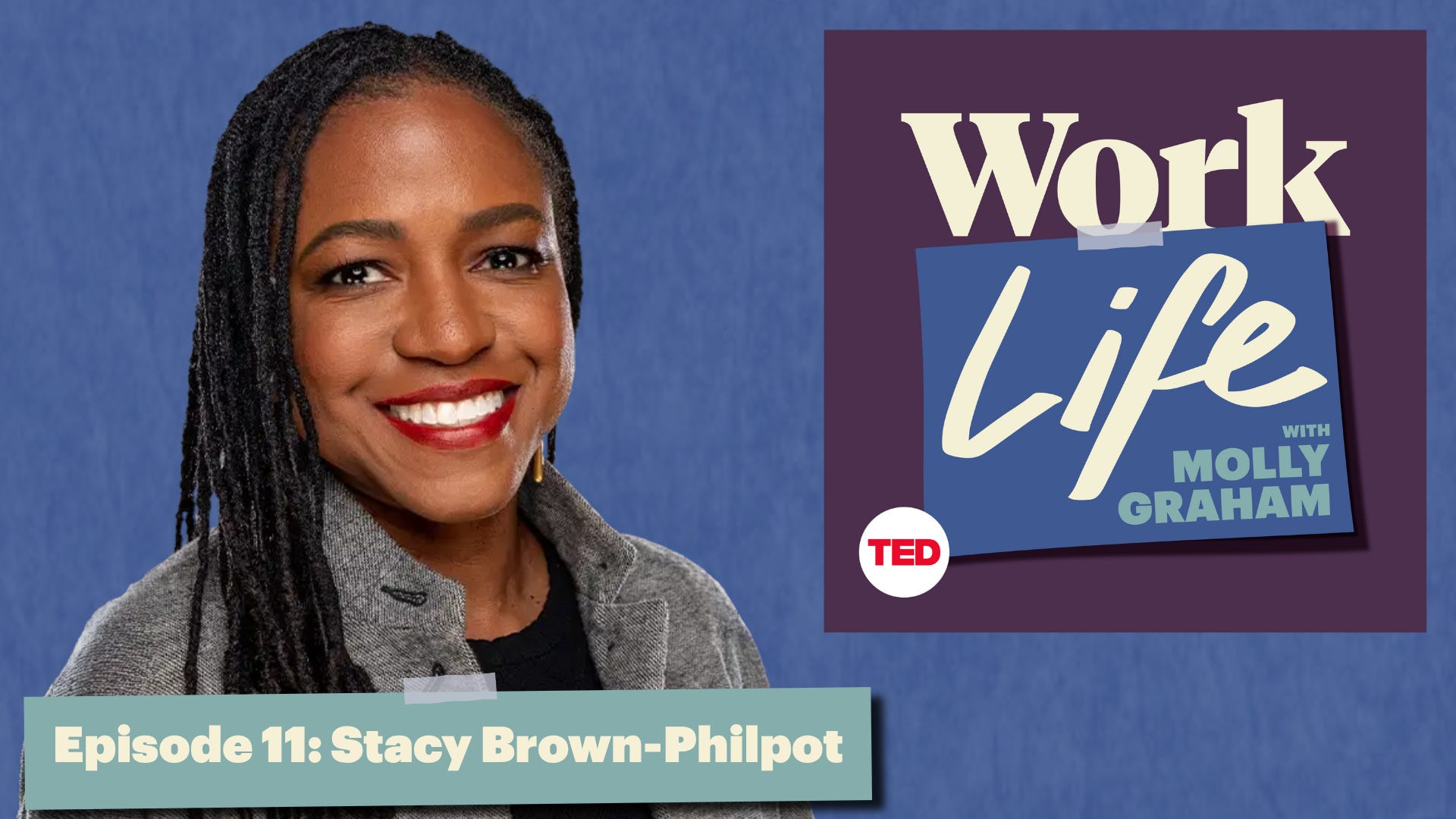
Faith at Work with Stacy Brown-Philpot
With Amazon Music, you can discover the WorkLife episodes most relevant to you. Listen to WorkLife on Amazon Music.
One of the themes that comes up in my curiosity — that I seem to ask every WorkLife guest in some form: when everything is uncertain, when the data is incomplete, when smart people you trust disagree with you… What do you reach for? What do you turn to?
For Adam Grant, it’s research and evidence. For Patty Stonesifer, it’s a mission statement she returns to again and again, like a compass that doesn’t move even when the terrain does. For Mark Rober, it's a few simple, sound principles and a focus on the next rock in the stream — he can't see where the crossing ends, but he trusts that if the principles are sound, it'll lead him somewhere awesome; he compares it to the scientific concept of emergence. For me, if I’m honest, I think it’s pattern recognition — decades of navigating and watching people navigate hard things, where I’ve built up something that feels less like a guess and more like instinct.
For Stacy Brown-Philpot, it’s faith. Actual religious faith — not the metaphorical kind we throw around in offices when we say things like “have faith in the process.” She means an actual relationship with God that she prays to, listens to, and organizes her decisions around.
It’s also not a subject that comes up much at work, at least not in the rooms I’ve spent my career in. Stacy told me she’s watched people avoid the topic for years, worried about offending someone, or being judged, or opening a door they don’t know how to close. It’s part of why I wanted to talk to her about her faith. Because I know it’s a huge part of who she is, and sometimes it feels almost taboo to talk about it in professional spaces.
I want to be clear that I was not raised in a religious environment. I would call myself spiritual but not religious. So I went into this conversation with genuine curiosity — for someone whose religious faith is at the center of their identity and life, how does it actually show up in your work?
Stacy’s words: “Faith is the substance of things hoped for, and the evidence of things not seen.” I thought that definition was beautiful, but I was honestly surprised at how tactical and tangible some of the examples were that Stacy gave in terms of how it impacts her work. She told me about raising Cherryrock Capital’s first venture fund and praying for a specific number that felt out of reach. She’d done the work — the meetings, the follow-ups, the spreadsheet. But there was a gap between what she’d planned and what she couldn’t control, and that’s where she put her faith. She ended up raising more than she prayed for, from an LP who had no idea what number she’d asked God for. She calls that evidence.
Here’s a clip from the conversation:
Despite not being religious myself, Stacy was describing something I recognized.
That’s the actual idea I want to leave you with, whether it comes wrapped in scripture or biology: clarity isn’t the same as certainty. The leaders who seem most grounded haven’t eliminated the unknown. They’ve found something — faith, emergence, a mission statement, a decade of scar tissue — that lets them keep moving through the unknown instead of freezing in front of it.
Some people reach for data. Some for a list of values. Some reach for a wiser voice in their head — echoes of a parent, grandparent, or mentor. Some reach for prayer. Some reach for a small set of design principles and the next rock in the stream. I mostly reach for the accumulated wreckage of every mistake I’ve already survived.
I'm not here to advocate for which one of these approaches is best. But if you don’t have an answer yet, you feel it, even if you’ve never named what’s missing. I remember this specifically in my twenties. I hadn’t watched enough people navigate hard things yet to trust my own read on a situation. Almost every decision felt like starting from scratch — weighing the same variables over and over, calling three people to ask what they’d do instead of trusting what I thought. Not because I didn’t have a point of view. I just didn’t have enough evidence yet that my point of view was worth trusting.
I don’t think you need to announce your compass at the next all-hands. I just think it’s worth knowing your own answer, in plain language, without hedging: when the outcome is still unwritten and you can only see the next rock and not the far bank — what do you reach for?
You can listen to the full WorkLife episode anywhere you get your podcasts or watch it on YouTube.
What else?
If this resonates with you, here are things you can do next:
Subscribe to Lessons to get new posts. I post at least 2X per month for all, and paid subscribers also get access to video courses and the full library of content.
Listen to the WorkLife podcast, where I talk to brilliant leaders and builders to untangle the messy, human side of work.
Follow me on LinkedIn, where I share more tools, thoughts, and a little of the day-to-day chaos.
And if you’re a leader looking for a community of peers to lean on and learn from, come find out more about Glue Club over here.